
A statement calling for a de-escalation between Iran and Israel has also divided leadership.
At this week’s Group of Seven summit in Canada, world leaders will attempt to persuade US President Donald Trump to end his punishing trade war, which experts say threatens global economic stability.
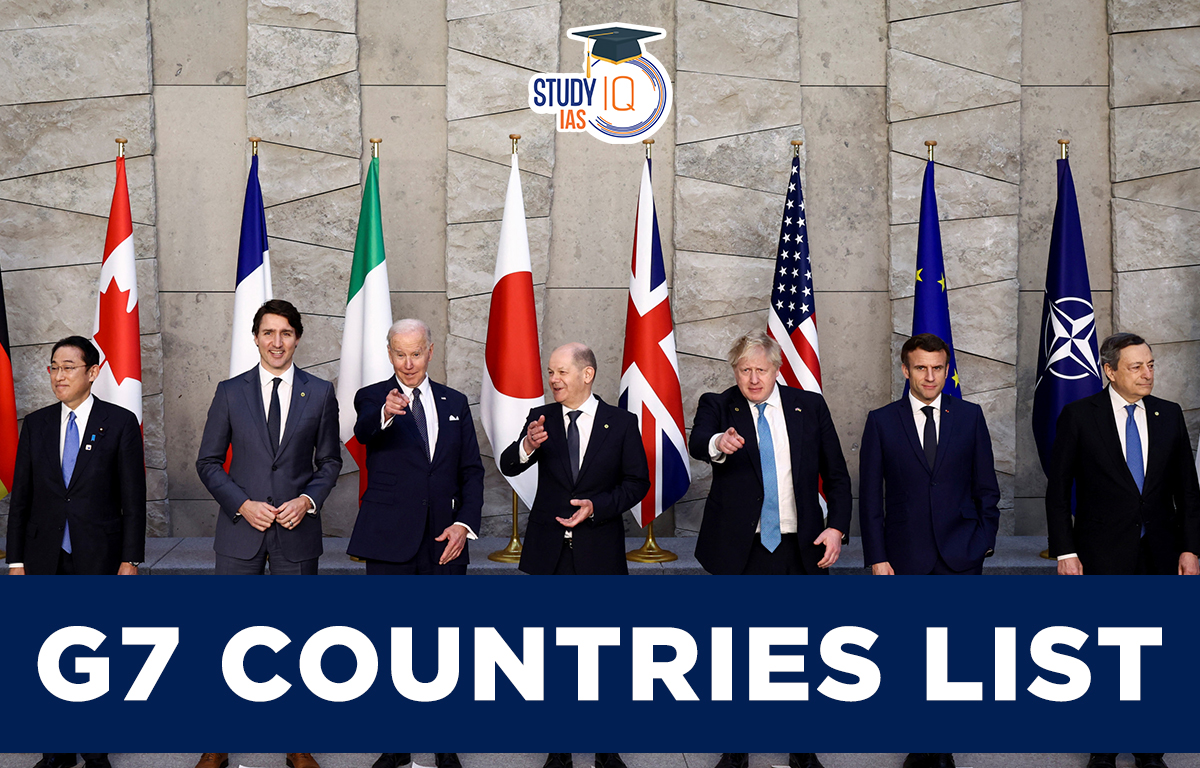
Trump’s baseline tariff of 10% already applies to the majority of the G7 nations, and he has threatened to impose additional tariffs. Cars, steel, and aluminum are subject to additional taxes in Japan and the European Union. The G7 consists of Canada, France, Germany, Italy, Japan, the United Kingdom and the US.
Recommended Stories
- The $7.4 billion opioid settlement with Purdue Pharma receives widespread support from US states.
- Smartphone announcement made by Trump Organization aimed at conservative customers
- The strike on Iran’s “most watched” television station: what we know
- Why the summit between the leaders of Central Asia and China is important
Arriving for a meeting with the host, Canadian Prime Minister Mark Carney, Trump said trade would be the “primary focus” of the summit, which began on Sunday and runs until Tuesday.
Canada is particularly interested in the trade issue because the Trump administration has recently announced a number of additional taxes on Canadian goods.
As her nation attempts to renegotiate its three-way North American free trade agreement, which also includes Canada, Mexican President Claudia Sheinbaum has been invited to the summit and will have her own face-to-face time with Trump.
Jamieson Greer, the US Trade Representative, is a member of Trump’s delegation. Despite the fact that there is little hope that the summit will result in a breakthrough in the trade negotiations between the US and the rest of the world,
Dozens of countries are locked in negotiations with the Trump administration to clinch some sort of trade deal before the US imposes stinging “reciprocal” tariffs, threatened for July.
The United States’ Treasury Secretary, Scott Bessent, stated last week that countries believed to be negotiating in good faith could request a later date.
Friedrich Merz, the German chancellor, told reporters that he and his counterparts from France and Italy would meet directly with Trump to discuss the US trade threat.
Merz told reporters, “I am firmly resolved to try, over the next two days, to talk again with the US government to see if we can find a solution.” He was referring to French President Emmanuel Macron, Italian Prime Minister Giorgia Meloni, and Merz.
He continued, “We may be able to get closer to a solution in small steps, but there will be no solution at this summit.”
Maros Sefcovic, the EU’s trade chief, attended the summit alongside the delegation led by Commission President Ursula von der Leyen. The EU’s trade negotiations are handled by the EU’s 27 member states.
Von der Leyen appealed to Trump to “keep trade between us fair, predictable, and open” shortly after arriving at the summit on Monday in a veiled plea for him to halt his tariff campaign.
During his one-on-one meeting with Trump, British Prime Minister Keir Starmer stated that he would discuss putting the UK’s trade agreement with the US into action.
The UK in May was the first country to sign a preliminary deal with Washington to avoid deeper tariffs although the 10 percent baseline levy stays in place.
Starmer stated that the transaction was in its final stages and would be concluded “very soon.”
Iran and Israel’s focus on trade talks
The exchange of attacks between Israel and Iran is escalating, which coincides with the trade talks. An Israeli air strike on Monday interrupted the broadcast of an Iranian state television station. James Bay of Al Jazeera claims that calls for de-escalation have been a source of contention at the meeting.
The issue with the G7 is that there are many points of view. On one end, you have President Trump, who appears to be unwilling to sign a de-escalation statement. Bay stated, “You have the Europeans, who have been saying “de-escalation” since the beginning of this situation on Friday.”
“Japan was very different from the other countries. It was very, very strong in its condemnation of Israel’s attack on Iran, so you can see just within the G7 a wide range of opinions,” Bay said.